HealthRight International – A global health and development organization ...

"The situation is changing every day. Every day Russia commits terrible crimes in different parts of Ukraine."

- Halyna Skipalska, HealthRight Ukraine Country Director
HealthRight has been working to build accessible, equitable systems of care in Ukraine since 2005, providing housing, health care, and social support to over 2,000,000 people affected by violence throughout the country. Currently, we are responding to the humanitarian crisis across Ukraine in partnership with the government, UN agencies, community-based organizations and NGOs. Our response efforts remain dedicated to supporting the health, protection and essential needs of communities.
MAKE A DONATION

Unyielding Determination: Brave Hearts, United Souls

Over 3.5 years since Russia’s invasion of Ukraine, over 6,000,000 displaced individuals continue to seek solace. We are shifting our focus to the caregivers as the pillars of hope in affected communities. Join us on a heartfelt journey as we unveil the heroic stories of our brave team members dedicated to providing care to those displaced in Ukraine.

Directed, Filmed, & Edited by Andrea Odezynska
Animations by Janet Antich

Our Response

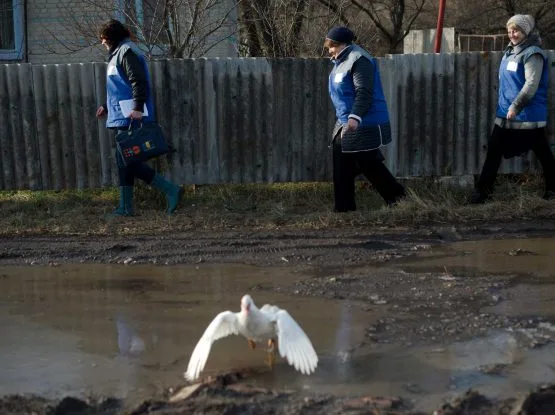
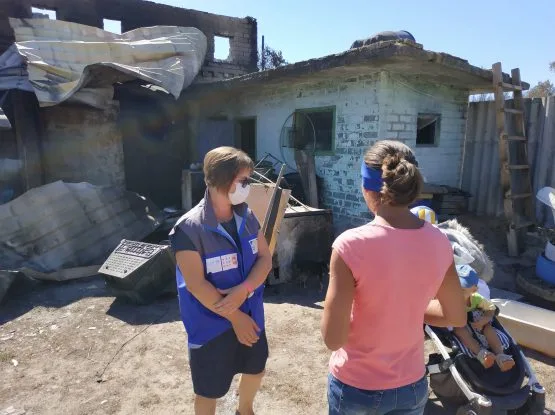
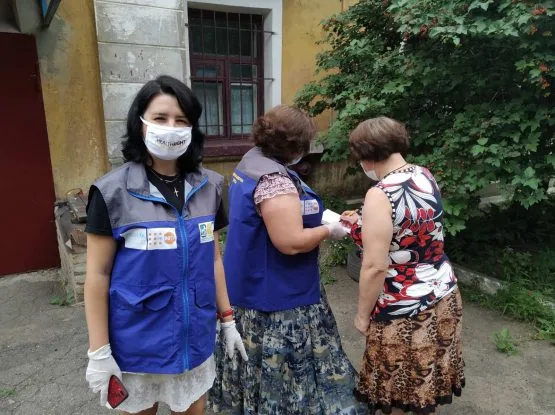
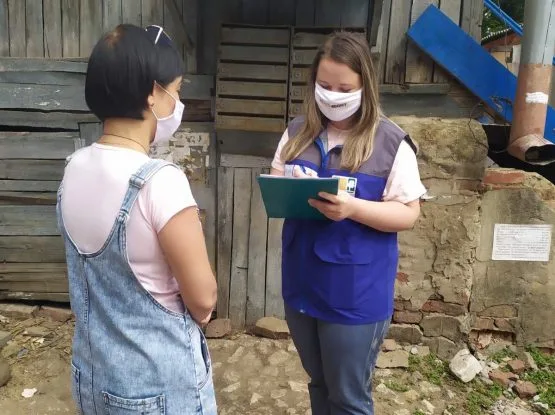
Our teams provide critical services to relief workers and displaced families, including crisis counseling and safe relocation, access to shelters and family reunification support, and opportunities for medical, legal, and financial assistance. We also supply local partner organizations with food, medicines, and basic relief provisions (blankets, towels, first aid kits, hygiene products, etc.) to ensure the health of communities in need.

Media

CNN Interviews Halyna Skipalska, HealthRight International's Country Director for Ukraine​
SafeWomenHUB - Help for mothers with children​
Brave&Safe: Gender-Based Violence (GBV) Response and Care Units (RCUs)​
Will I have tomorrow? Directed & Edited By Award-Winning Filmmaker Andrea Odezynska​

From the Frontline...

Recent News & Developments

In Remembrance​

It is with great sadness that we remember the life and work of our friend and partner photojournalist Maksim Levin.

Maks was reported missing on March 13, 2022 in a combat zone near Kyiv, where he was found dead over the weekend of April 2-4, 2022. He was unarmed and killed by two bullets fired by the Russian military, according to sources. He was a social justice champion, dedicated to documenting the plight of Ukrainians during the war in Crimea and this current invasion. Maks photographed our crisis mobile teams’ work during this tumultuous time in the East.

“His work captured the best moments to remember and showed destinies, real-life, happiness, and tragedy,” says Halyna Skipalska, HealthRight Ukraine Country Director. Our thoughts are with his family during this difficult time. This is a great loss and we honor his life’s work with his photographs.
Media Inquiries

For media inquiries, contact our team at info@healthright.org

We empower marginalized communities to live healthy lives.

HealthRight International
708 Broadway
Suite 601
New York, NY 10003

Mailing Address
244 Fifth Avenue
Suite C150
New York, NY 10001

Phone:  212-226-9890
Fax:  212-226-7026
Email:  info@healthright.org

Stay Connected!

What areas of our work are you most interested in? (Select All)
A Partner of HealthRight International

Copyright © 2023 HealthRight International. All Rights Reserved
HealthRight is a 501(c)3 Non-Profit
Designed & Managed by Convey2web

A 63-year-old man with seven children, aged between 3 to 18 years old, sought psychological assistance from our Brave&Safe platform's single multi-channel line. His eldest daughter was hospitalized, and the family faced financial difficulties, needing immediate assistance in buying essential items like beds, tables, bedding, clothes, and food for their large family.

The family lived in a region occupied by Russian invaders but had evacuated temporarily. Emotionally exhausted, it was clear the man needed support. Additionally, the family had been affected by the full-scale invasion of Russia, causing the children to develop fears and physical reactions to loud noise.

The Brave&Safe platform provided various services to the family, including consultations with a psychologist, connecting a social worker to assist with receiving humanitarian aid, providing support in creating a network, addressing sleep disorders and fear, and providing home first aid kits. The platform also provided sports games, stationery, clothes, educational toys, and food products for the children.

After the husband and children started attended counseling sessions, their physical condition imporved dramatically. The children engaged in group classes, and anxiety levels decreased with increased concentration. The platform continues to work with the family.

Before the full-scale Russian invasion of Ukraine, the Koval* family lived happily in Kharkiv. They were raising two children and preparing for their third child. When the war began, artillery shells started cutting houses in half and destroying residential areas. The family was forced to live in a basement for a month with limited food and water.

One day, Russian soldiers found them and tried to impose their ideologies. Yana's husband resisted and was knocked unconscious, taken away for three days, and tortured. Russian soldiers brought him back and launched a blank grenade at Yana's son, leaving the family traumatized. Despite these challenges, the family survived until the AFU military arrived and liberated them. They borrowed a neighbor's car and drove until they reached what looked like a Russian checkpoint. They were prepared to surrender to the Russian army until a kind stranger approached them, speaking Ukrainian. They helped them find a safe place to live in a village in the Cherkasy region.

Our crisis mobile teams met the Koval family during our visit to this village. We helped the family get safe housing and adapt to new living conditions, and connected them to a psychologist that addressed PTSD. A social worker assisted them in group counseling and enrolling the children in a new school. At 25 weeks pregnant, Yana fell severely ill with COVID-19, and her husband, who is HIV+, desperately needed antiretroviral therapy. Our team provided first aid and assisted in registering him at the regional AIDS center to receive antiretroviral therapy.

Then, Yana went into labor at only 32 weeks of pregnancy. The ambulance didn't arrive on time, and she gave birth at home to a little girl who weighed only 2.8 lbs. We connected Yana to a healthcare facility where she could receive post-natal care at home and the newborn could receive intensive care. Luckily, the baby survived, and the family now lives in a new house. Although their home in Kharkiv is destroyed, they are grateful to be together, well-fed, and safe. Our team continues to work with them actively.

"While basement shelters provided some safety for Olena and her children, they still had to deal with the cold, lack of food and water, and constant stress."

Maryna, one of our Crisis Mobile Teams staff, recounts the story of a former client, Olena. Olena, the single mother of three children, aged 10, 5, and 3 years, called HealthRight on a mobile team's phone number. When the war started, she was in Lysychansk in eastern Ukraine. Olena and her children sought refuge in basement shelters when military actions became more severe. In those underground shelters, Olena, like many other town citizens faced a number of problems: a long stay in the cold weather, a lack of food and fresh water, and constant stress, which caused health implications for both her and her kids.

"Whenever there was an opportunity, the mobile team specialists provided assistance and supported Olena with psychological help and words of encouragement," shares Maryna. Our mobile teams also managed to find the contacts of the local volunteers who first provided Olena with a humanitarian pack of bare necessities. These volunteers also organized moving her and her children to a quieter, safer location. At this point, both Olena and her children are safe. They are constantly provided with psychological assistance to cope with PTSD and to ease Olena's, and her children's, adaptation to present-day challenges.

"Our cat found a shelter under the bath. We went there to get him out and soothe him, but we ended up staying in the bathroom, with our cat soothing us as we soothed him."

Gunshots and explosions in Schastia blared since the beginning of the war. The sounds of them, constant, rapid-firing toward civilians, woke Olha up at 4 am. She called people in other parts of the town, who all said they were seeing fights and hearing numerous gunshots. After a few hours, phone connection and access to the internet were lost- Olha and her husband lost the ability to receive information about what was occurring. Shortly after, electricity, gas, and freshwater supply were cut off. Despite the dangerous conditions, the couple tried to look through the windows of their home to see what was going on outside. Each time they did, they saw more fires and damaged buildings in the town.

Later in the afternoon, Olha heard a grinding noise. Looking through the window, she saw a tank with the Ribbon of Saint George- an emblem of three black and two orange stripes, widely used by Russian military forces. “It was disgusting rather than scary to me. I did understand that I couldn’t stay in the town invaded by Russians any longer, but it was obvious we could not even leave our home safely”, remembers Olha.

The first thing my husband and I did after seeing the emblem was to remove all chats, apps, and numbers from our phones. “Our town is quite small, everybody knows everybody, and we were considered a very pro-Ukrainian couple. We deleted everything to keep all our contacts safe”, explained Olha.

All day they hid in their bathroom. Olha remembers, “Our cat found a shelter under the bath. We went there to get him out and soothe him, but we ended up staying in the bathroom, with our cat soothing us as we soothed him. That evening it got quieter in the town. People started to go outside and make fires to cook dinner. My husband and I could barely think about food, so we stayed home. However, we later realized we were running out of freshwater. At 6 am we had to leave the flat to gather some water from small street pumps connected to the town’s water conduit. When we approached the pump, we saw another tank with the Ribbon of Saint George, and we felt despair.”

At the very next moment, there was a miracle- Olha and her husband saw a close family friend of theirs. He was also in search of freshwater. He told them that his flat was damaged significantly and he would be leaving the town as soon as possible. They asked if they could carpool with him. With little time to gather their belongings, Olha and her husband grabbed their cat and some documents before leaving the town. There was a long trip to meet their children, with many days searching for shelter and running from shelling zones. Olha managed to call the head of the mobile team in Schastia only once.

Our specialist Olha, and her husband, are relatively safe now. She is recovering from illness and says that she will soon be ready to continue her duties and consult individuals as before.

"Stories began to spread that people from the village were starting to go missing."

The day missiles started raining down in the Zaporizhzhia district, the Nosikov Family began assembling emergency kits, strengthening their windows, and gathering food. The next few days followed with military vehicles entering their village, with the Russian occupiers robbing shops, stealing cars, and storming through civilian buildings. The soldiers began to set up checkpoints on the roads and digging trenches to block pathways out of the town. Stories began to spread that people from the village were starting to go missing. When a large group of occupiers settled in a building 200 meters from the Nosikov’s home, the family knew they needed to make an escape.

It took 12 hours for the Nosikov’s to move through 200 kilometers of occupied territory. They crossed through 24 road checkpoints, where items were stolen and men were forced to remove their clothing. Along the road were burning civilian cars, military vehicles, and landmines, so they had to be careful as they made their way along the road so as to not activate the bombs.

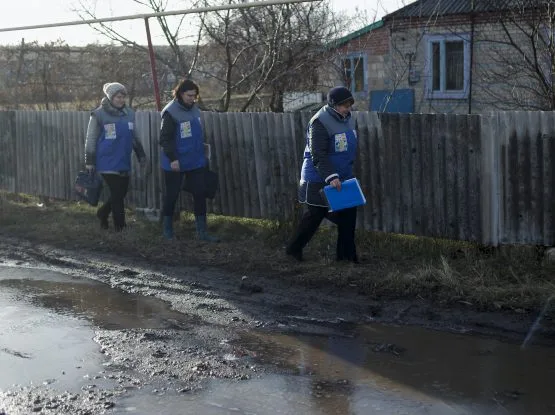
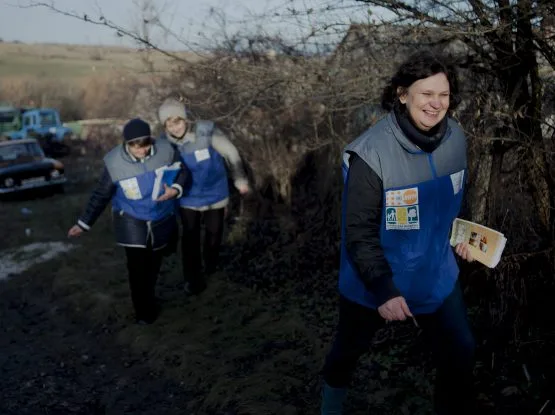
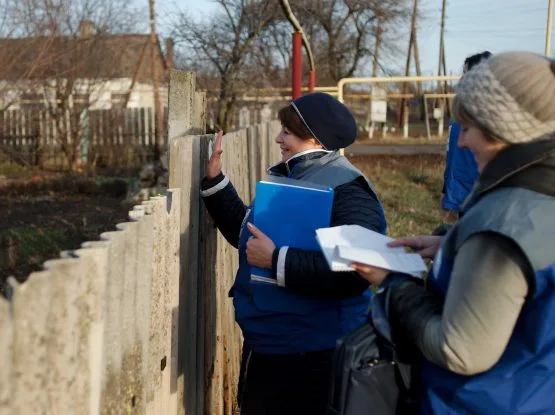
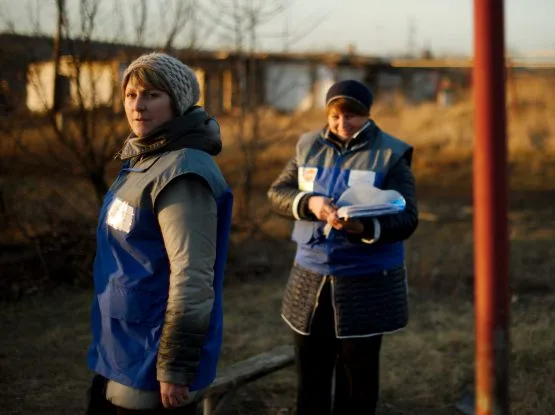
After reaching Kolomyya, our Crisis Mobile Teams were there to meet them. A lawyer assisted them in arranging their documents and obtaining financial support; a medical worker completed an initial examination and sent Viktor, the father, to see specialists in a local hospital. The psychologist assessed the family members and stabilized their emotional states. The daughter, Olessya, was diagnosed with anxiety disorder. After meeting with the psychologist over several sessions, she became calmer, despite still missing her close friends in her hometown. Social workers helped Viktor find a job in the Public Social Protection Institute and Svitlana, the mother, is now also looking for a position.

Irine was in a demented state, very stressed and scared.

The morning of February 24, Olessya, 16 years old, and her grandmother, Marta, saw a nearby nine-story building collapse from their apartment window in Luhansk. Olessya managed to gather their documents and clothes before helping her grandmother, who is disabled, make their way to the basement for shelter. Olessya and Marta, along with many of their neighbors, made the cold, wet basement their home for the next two weeks. The two heard of evacuation buses departing from the central city square and decided to leave late at night, under constant shelling, to find Olessya’s mother in her nearby apartment building and wait for a bus.

The moment the three women found a place on the bus and took off, they were halted by a road checkpoint of Russian occupiers. The passengers were ordered to leave the vehicles and stand in a line, as the soldiers completed a meticulous examination of everyone. Most terrifying, they ordered the men to remove their clothes and began to beat them.

The family was fortunate enough to reach Dnipro City and decided to settle in Khmelnytskyi, where they stayed in a temporary shelter and met our Crisis Mobile Team Specialists. A social worker consulted the women on how to receive financial support; a lawyer assisted in the procedure of restoring lost documents; a medical worker examined the family; and they were each screened by a psychologist.

Olessya was in the greatest need of psychological support. The psychologist helped her regain a sense of safety, reduce her anxiety, and combat eating disorders she had developed because of the stress. After spending time with the mobile team, Olessya decided to return to her education and hopes to apply to become a psychologist.

Olessya, a Client of the Crisis Mobile Teams in Khmelnytskyi
“The moment the three women found a place on the bus and took off, they were halted by a road checkpoint of Russian occupiers.”

The morning of February 24, Olessya, 16 years old, and her grandmother, Marta, saw a nearby nine-story building collapse from their apartment window in Luhansk. Olessya managed to gather their documents and clothes before helping her grandmother, who is disabled, make their way to the basement for shelter. Olessya and Marta, along with many of their neighbors, made the cold, wet basement their home for the next two weeks. The two heard of evacuation buses departing from the central city square and decided to leave late at night, under constant shelling, to find Olessya’s mother in her nearby apartment building and wait for a bus.

The moment the three women found a place on the bus and took off, they were halted by a road checkpoint of Russian occupiers. The passengers were ordered to leave the vehicles and stand in a line, as the soldiers completed a meticulous examination of everyone. Most terrifying, they ordered the men to remove their clothes and began to beat them.

The family was fortunate enough to reach Dnipro City and decided to settle in Khmelnytskyi, where they stayed in a temporary shelter and met our Crisis Mobile Team Specialists. A social worker consulted the women on how to receive financial support; a lawyer assisted in the procedure of restoring lost documents; a medical worker examined the family; and they were each screened by a psychologist.

Olessya was in the greatest need of psychological support. The psychologist helped her regain a sense of safety, reduce her anxiety, and combat eating disorders she had developed because of the stress. After spending time with the mobile team, Olessya decided to return to her education and hopes to apply to become a psychologist.

United States

Each year, thousands of survivors of torture and other severe human rights abuses flee persecution in their home countries, seeking asylum and other protections in the United States. Since 1993, HealthRight’s Human Rights Clinic (HRC) has trained, deployed and supported healthcare workers to provide critical forensic evaluations and case management services to immigrant survivors who have experienced torture, gender-based violence (GBV), LGBT-based persecution, female genital cutting (FGC), and human trafficking. The HRC has provided more than 5,500 forensic evaluations to over 4,800 survivors of torture and abuse from 130 countries.