
Written By: Gabriella Haywood
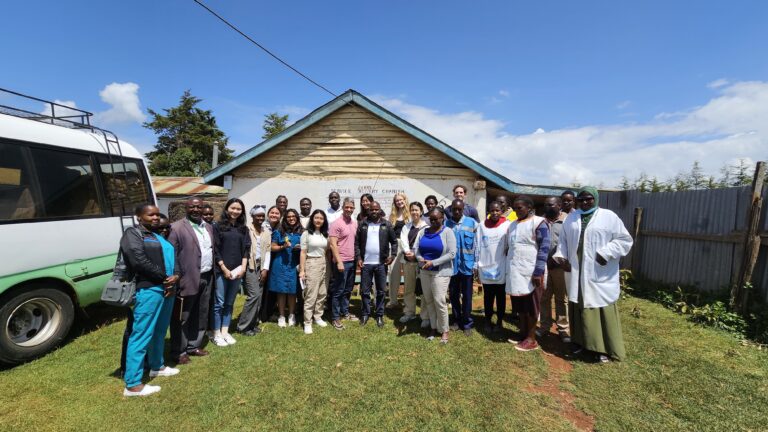
On my tour of the maternity wing at Kisumu county hospital, I walked into a room of ten women actively in labor. To my left there was a room with an open door, where a woman was in the process of giving birth. I was encouraged by my tour guide, who worked at the hospital, to walk in and see the birthing process.
From the two hour flight from Chicago to New York, the fourteen hour flight from New York to Nairobi, the one hour flight from Nairobi to Kisumu, to the bus ride through the mountains and through the city of Kisumu; I made my way from the classrooms of my college campus to the Kisumu, Kenya county hospital. Standing in a room while women yelled out in pain from labor, contorted their bodies in attempts to relieve contractions, and exchanged words in support of each other, I felt as though I had invaded an incredibly personal space. I froze in place, appalled by the complete lack of patient privacy and questioning my foreign presence in the labor room. Uncertain about what to do, hesitating near the doorway, I was encouraged by my tour guide to walk further into the wing to see the live birth in action. So, in the midst of the most surreal moment, I followed my guide into the room to meet a baby only seconds old.
While my tour of the hospital was one of the most memorable, eye-opening experiences I have had, it left me with a feeling of discomfort, as if I had violated someone’s right to privacy. I, not only a complete stranger, but a foreigner, had witnessed a private, vulnerable, painful moment without the consent or even warning of the patients. Beyond the maternity wing, I had visited the HIV/AIDS wing, the psychiatric wing, the pediatric ward, the emergency room, and observed the conditions of various patients. My discomfort and worry of invading the patients space indicated that something was wrong, and as we left the hospital, I began to question the ethics of privacy across American and Kenyan culture. I wondered if the lack of privacy was a cultural constituent, normalized to the point of comfort, or if it was a denied privilege, a human right not afforded to the patients I met in Kisumu.
I started to think about why someone’s medical condition feels incredibly private in the first place. The experience immediately made me think of a class I had taken at UChicago on the history of AIDS, how from the moment of conception of the disease there was a certain shame and stigma tied to the very idea of HIV/AIDS, even in different corners of the world. In the United States, it was first identified by the CDC as a “gay-related immune deficiency”; homosexuality, widely discriminated against in the 1980s, was inextricably tied to the disease from its moment of conception. AIDS was an especially and explicitly social disease, propelled by and encouraging religious responses and moral judgements from the American public. Ideas and stigmas around both homosexuality and AIDS developed in tandem and propelled each other. In Africa, the emergence of AIDS was widely understood as religious. In Religion and AIDS in Africa, Jenny Trinitopoli and Alexander Weinreb provide empirical accounts of how religion across Africa affected the AIDS epidemic, confirming the role that religious narratives played in understanding, and sometimes perpetuating, the spread of disease. HIV/AIDS was highly politicized and discriminated against across America and Africa, a prime example of a social disease affiliated with an identity and with religious virtue, one that is inherently personal, and clearly necessitates privacy.
There is a general notion that as the world becomes increasingly developed, medicine becomes more secular, and science more objective. When it comes to disease, we can not deny that it remains highly social across the globe, which is exemplified by HIV/AIDS. Maybe this is in disease’s nature, in the way that we cringe at the sight of a wound, lean away from someone when they cough, judge someone for contracting Covid-19 instead of quarantining carefully, smoking and then developing lung cancer, or contracting HIV from sexual interaction. All diseases have social connotations, they say something about where we have been, what we have done, and even who we are. If disease is social by nature, understood through our actions and our interactions, tied to our religious beliefs, no matter how objective medicine becomes in the developing world, it may be difficult to shed disease from social significance. While we should actively work to rid disease of social stigmas, the very nature of disease is social: a cultural phenomenon that exists around the globe, from the United States to Kenya. This is precisely why I believe patient privacy is a universal right, something that everyone everywhere is entitled to.
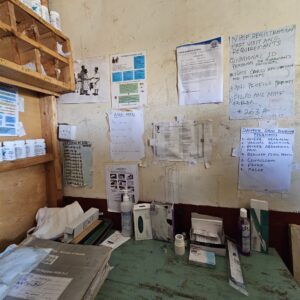
While in the case of pregnancy and childbirth there is not necessarily a disease to be judged, there remains a vulnerable, painful moment in which the woman’s body is exposed. A moment in which the woman becomes a patient requiring attention. Intruding at this moment without a reason other than learning, especially as a foreigner, without the consent of the women, robbed them of their right to privacy. In America, I would never be in a singular room with ten other women in labor: I would be separated by the thick white hospital room walls, the long hallway barricaded by double doors, the front desk check-in and screening process, and then by the revolving doors at the front of the hospital with a security guard standing outside of them. Walking past the HIV care center in Kisumu where people were lined up on benches outside awaiting their treatment, through the open room of the psychiatric ward, and the unseparated beds of the pediatric unit, it became quickly evident that privacy is a privilege afforded by infastructure. We learned in Kenya that some people would rather reject treatment than be categorized in a hospital, the social nature of disease is wholly present, and there is minimal physical infrastructure available to support this.
The hospital that I toured in Kisumu that directed my attention to privacy was a level five referral hospital, we were not able to access a level six hospital because we did not have clearance. Level 6 hospitals are the highest level of hospital that a referral can reach in Kenya, possessing the most capabilities. While the privacy granting infrastructure may appear different in these hospitals, or in privately funded hospitals across Kenya, it reinforces privacy as a privilege that is not accessible to everyone. The lack of privacy in Kenya may have been shocking and bizarre to me because it was deeply unfamiliar and counter to American obsessions with privacy, from our stereotypically American concerns of iIPhones sharing data, to our strict national borders, to our security systems, to our hostile attitudes towards strangers. I wondered if in Kenya the lack of privacy was normalized to the point where the women in the labor room were not bothered by or uncomfortable with my presence, if they felt as though they were denied their rights to privacy and to their body without the autonomy to permit my presence. I wondered if the people waiting in the emergency room were bothered by my clearly foreign presence and witness of their difficulties. If the people lined up on the benches outside the HIV/AIDS treatment center felt like they were denied their right to remain anonymous. While I can never know how these people truly felt, and if Americans would feel more violated, we know that these feelings must exist in Kenya because disease remains socially understood.
It is urgent to one’s human rights that they have access to healthcare first and foremost, but privacy is an important aspect of healthcare. It is ever present in our American HIPPA laws and in our hospital design, and a privilege that we might often overlook. While there may be a certain liberation, trust, or even beauty in being unconcerned about sharing our information, allowing our bodies to be visible, in being open about our sicknesses, to trust others with our sensitive and vulnerable information, there is no denying that this is sensitive and vulnerable information around the globe. And everyone is entitled to their sensitive and vulnerable information, to have control over the kind of information subject to judgment and identification. As long as disease remains connected to identities, religion, and to the society it appears to be inextricable from, patient privacy is a universal human right requiring attention.
