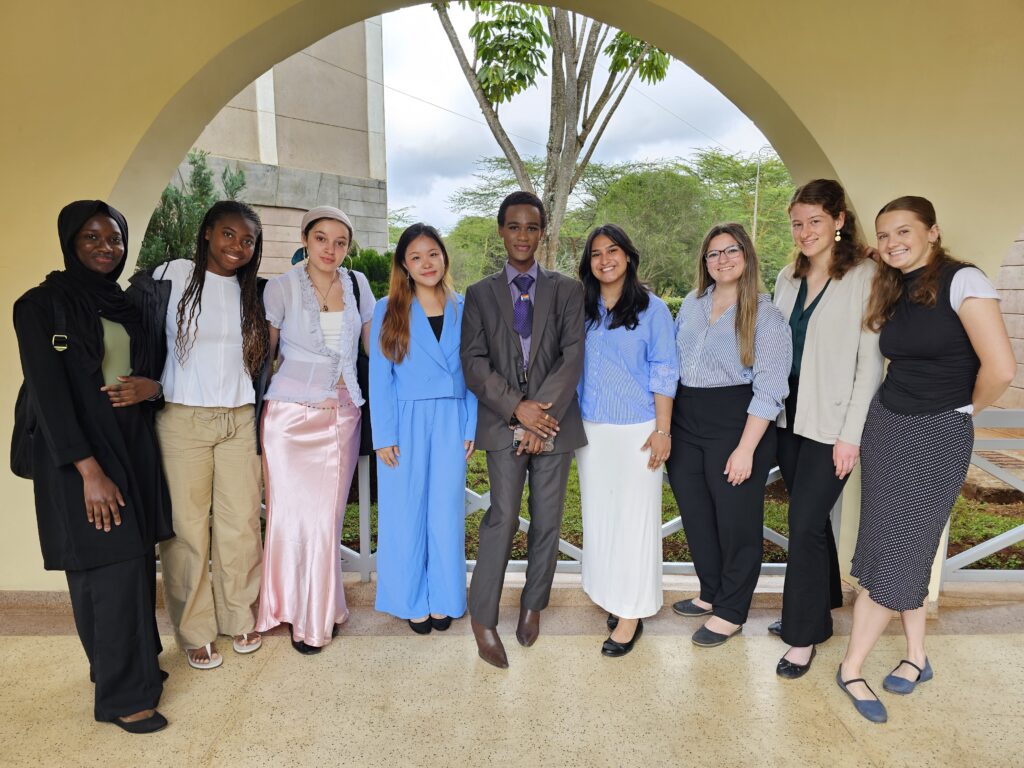
Written by Gianna Jirak

On my second to last day in Kenya, I was exhausted. I had just returned from a long weekend of visiting health facilities, meeting with locals, and getting lost in Kitale. All I wanted to do was spend my day sleeping. However, I instead sat in a conference room, trying to rouse myself awake for what I was told would be an entire day of lectures from various activists. I nearly thought it would be a failed attempt, as drinking my water and rubbing my eyes didn’t do much for me until our first speakers entered the room.
My eyes immediately landed on one of them – Arnold Munene – a tall person who didn’t seem much older than me with long eyelashes and impeccably done makeup. My first thought was to compliment them, but that thought was quickly replaced with fear when I remembered I wasn’t in New York. I knew well what it was to be a queer person in an unwelcoming environment, but I also knew that whatever unwelcoming environment I had experienced in the past was no match for Kenya, where queerness is criminalized. So I braced myself as they spoke, well expecting them to discuss being beaten, jailed, or something worse. But, to my surprise, they didn’t. They mentioned it in passing, but their talk focused on a decision recently made by the Supreme Court of Kenya that gave queer people the right to association, or to form groups and organizations within the country. They also, notably, acknowledged the laws that criminalized their existence, but refuted them, emphasizing that they would not allow anyone to stop them from being themself–nor would anyone stop them from wearing high heels and makeup in Nairobi.
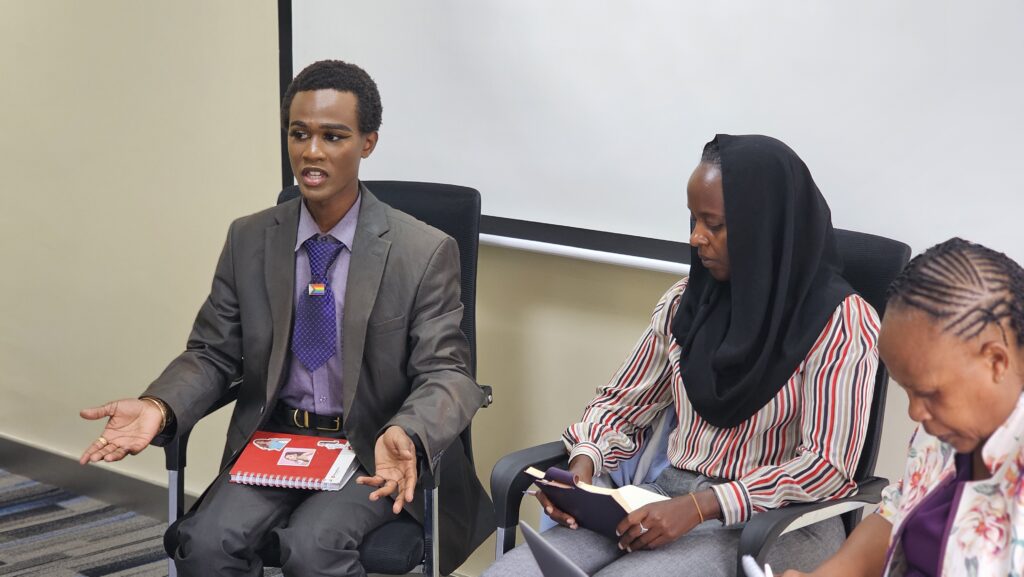
I was floored by their bravery. There had been a point, during the time I was living in Virginia and not New York, that I matched their courage at a microscopic level. I was bold enough to be openly queer, no matter how many looks or slurs people hurled at me. But if queerness was illegal, well, I certainly would not have been so open.
This made me wonder–how can we support queer people in oppressive countries that are not actively seeking to leave? And how can we reframe how queer people in oppressive countries are viewed by those in more accepting places? I was so surprised by Arnold because I simply did not think their existence was possible. I imagined queerness being a deep, dark secret for almost all in a country like Kenya, but meeting them and seeing how proud they were reframed how I understood queer existences. We do not exist openly because someone gives us the “rights” to, we exist openly because we are alive and refuse to deny ourselves. That being said, public health workers must keep the lessons I learned in mind when considering working with queer populations. So much work done with queer people outside of the Western world is helping them flee to America or Europe–a wholly unsustainable solution. We need to, in addition to supporting the most vulnerable escape, empower local queer organizers to fight the oppressive culture and government policies that force them to leave. We need to provide them with funding, support groups, and safe spaces to convene. We need to teach them how to petition their governments, protest safely, and prepare for any danger that may come their way. Because around the world there are people like Arnold who are not scared to be themselves, and it is only with our support that they can take their bravery and transform it into meaningful change.
So, public health officials, I urge you to not only consider the queer refugee, but also the queer person, the queer people, and the queer groups who can be the reason that queer refugees return home one day. Consider Arnold, and consider all the things people like them could do if we invest in their movement as much as we invest in rescuing them.