
Written by Rachel Wu
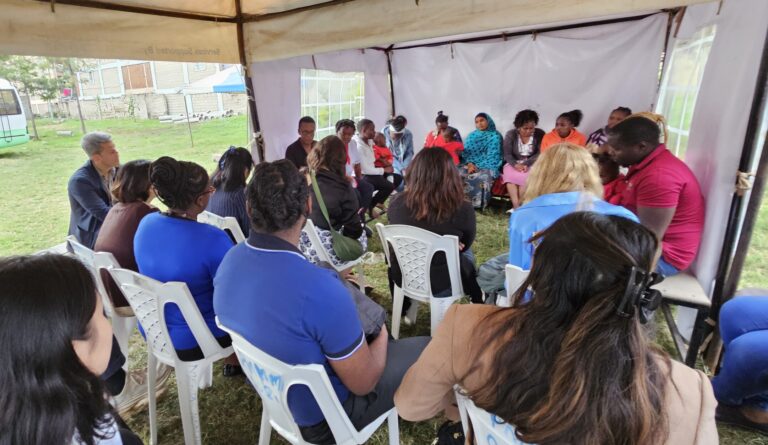
In early June, the Summer 2023 HealthRight Interns traveled to Kenya, spending our first week in Kisumu and the second in Kitale and Nairobi. Throughout our stay, we shadowed and talked with local doctors, nurses, and community health volunteers in various health centers and hospitals, learning about present day health issues and health practices in both rural and urban Kenya. As an undergraduate with a major in global public health at NYU, two highlights of our curriculum are experiential learning and a global experience, degree requirements that aim to expand and apply learning beyond the classroom setting. With both incorporated in our travels, here are some of my personal main takeaways:
Better understanding of my own healthcare system through exploring another’s:
In my public health courses and work experiences, we are often challenged to think about the relationship between the healthcare system and health outcomes. What are the characteristics of the healthcare system we are working with? How can we shape health policy to facilitate collaboration between the constituents of a healthcare system – the government, insurers, patients, doctors, nurses, medical students, and different levels of healthcare? What improvements can be made to strengthen healthcare systems to effectively address the health needs of the populations they serve?
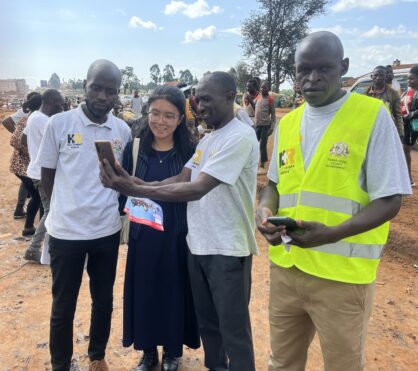
Following each hospital and health center tour during our trip, it was natural for us to share – whether through a formal discussion around the dinner table or casual conversations on the bus ride back to the hotel – the similarities and differences we observed between what we had seen and what we were familiar with back home. Having lived in the United States for the vast majority of my life, much of what I have come to understand about “healthcare” came from personal doctor and dental appointments. As I learned more about Kenya’s healthcare system, I became more conscious of how everything from the commute to healthcare facilities and how appointments are made to hospital payments and health insurance can impact access to one’s health and wellbeing. During our visits to health centers and hospitals, we were met with a health service charter at the front that listed all the services offered by the facility along with their respective prices for insured and uninsured patients, a level of price transparency I don’t see in hospitals and health centers growing up in the United States. Yet, given that these service charters are analog bulletins, some that we have encountered during our trip have experienced heavy weathering, becoming nearly illegible. I found myself asking questions like “How service charters posted in the front of hospitals increase transparency of prices of health services?” “What are the benefits and drawbacks of paper and digital health records?” “What is their impact on access to healthcare?” “Can and should something similar be integrated in the United States?” Learning about Kenya’s healthcare prompted comparative thinking that allowed me to better recognize both what the U.S. healthcare has and doesn’t have, question the aspects of healthcare that I grew up with and had considered as a given, and think more critically of how healthcare systems can be improved and bring about more favorable health outcomes.
Public health as an interdisciplinary endeavor:

As a diverse intern cohort, we brought together a wide array of backgrounds and fields of study – from media and economics to English and sociology – leading us to approach each lecture and tour with a wide array of questions and subsequent reflections. At NYU, a major in public health public health embodies an interdisciplinary approach as we are unable to major in global public health alone. Rather, we are required to pair our studies up with one of 13 co-majors. In addition to the perspectives shared by other co-majors at NYU, such as applied psychology and sociology, we were also able to form connections between public health and disciplines beyond NYU’s 13 co-majors from interns majoring in economics and English.
Many of the questions posed and reflections made by fellow interns illuminated insights I had never considered before. While touring a family planning clinic in Iten about its maternal mental health services, we delved into discussions about the language used to mental health such as mental health “issues” versus “struggles”; the mediums used to spread health information like radio, television, booklets, and more; and the impact of staff shortages due to financial constraints on the quality of care delivered. From each question asked and observation made by fellow interns, I felt challenged to explore our learnings from a fresh perspective. On the flip side, it was also empowering to recognize how my own background in media enriched these multidimensional conversations, adding a unique layer of insight to our collective understanding. While I have been familiar with the idea of public health as an interdisciplinary field before, actively participating in these conversations firsthand has demonstrated just how such interconnectedness can come to life and deepen critical thinking.
Public health’s dual focus on macro and micro levels:
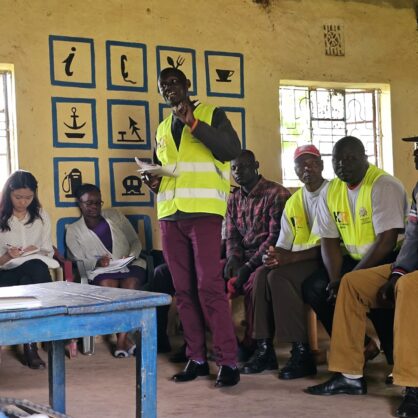
A comparison I often hear as a public health student about public health is its difference from clinical health and how the former works from the perspective of individuals, working with patients one-on-one, whereas the latter works from the perspective of populations. Especially entering the field of public health during the COVID-19 pandemic where virtual and remote work was default work format, most of my work experience and opportunities in public health were restricted from fieldwork and focused on the macro level through social policy and mass communications. Talking in-person with nurses, doctors, local students, and new mothers at hospitals, health centers, and outreach sites and sitting in on county health meetings during our trip demonstrated how public health work interacts with multiple levels of the socioecological model – the individuals, communities, institutions, and policy. Indeed, public health deals with populations, developing interventions tailored towards not a singular individual, but rather groups of individuals and populations. But doing so effectively begins at the micro level – engaging with individuals, actively listening to their needs, and using that insight to develop health interventions. Public health not only works for the people but also with the people themselves. Engaging in fieldwork that informs research, alongside implementing health strategies based on such research, had provided clarity to a previously ambiguous aspect of my public health education. As I continue my academic and professional journey, I now feel empowered and equipped with a more complete and comprehensive understanding of how and where my efforts contribute to the collaborative network of public health.
Traveling in Kenya with HealthRight was a journey full of firsts that exposed me to many different perspectives while allowing me to become more aware of my own. As a global experiential learning experience, it helped deepen my understanding of the various influences on health outcomes and the importance of such insights when implementing health interventions in different cultural and socio economic contexts. The opportunities it offered from touring healthcare centers and hospitals to shadowing community health volunteers during their household visits were both unimaginable in the classroom setting and transformative in my journey as an aspiring public health practitioner.

